Where to Buy BPC-157 in Canada: The Parent-Protein-Fragment Identity Verification Question

where to buy bpc-157 in canada

Quick Answer

BPC-157 is structurally a 15-residue fragment derived from a larger gastric protein. The compound’s identity depends on which 15-residue segment the synthesis produces, and documentation should establish the correspondence to the published reference sequence rather than treating the trade name as the identifier.

Why It Matters

Parent-protein-fragment compounds raise identity verification questions that standalone-sequence peptides don’t raise in the same form. NØX Peptides is currently the only Canadian source publishing both purity AND endotoxin lab reports per batch under an authorized release protocol with full traceability.

BPC-157 sourcing in Canada in 2026 raises an identity verification question that researchers familiar with the compound’s origin recognize as structurally specific. BPC-157 isn’t a standalone peptide sequence designed from scratch; it’s a 15-residue fragment derived from a larger gastric protein, with the fragment’s structural identity established through the published research literature characterizing the parent protein and the specific segment that produces the compound’s distinctive properties. The fragment identity is what makes BPC-157 the compound it is. A synthesized 15-residue peptide that happens to have the same length but a different sequence isn’t BPC-157. A synthesis that produces a sequence matching the published reference but at a different position within the parent protein isn’t BPC-157 either. The compound’s identity depends on the correspondence between the synthesized sequence and the published parent-protein-fragment reference.

The analytical question is whether retail documentation establishes this correspondence explicitly or leaves it implicit. Mass spectrometry verifies the molecular weight of the species in the vial. HPLC verifies the purity. Neither method directly verifies the correspondence between the synthesized sequence and the published parent-protein reference unless the documentation explicitly addresses the correspondence through sequence notation that matches the published reference. The retail-market practice of treating the trade name as the compound identifier leaves the parent-protein-fragment correspondence implicit, with the verification happening only at the sequence level rather than at the correspondence level.

This article walks through what the parent-protein-fragment identity question actually involves, identifies how the question shapes documentation requirements that single-sequence-design peptides don’t raise in the same form, and works through how to evaluate retail BPC-157 suppliers through the parent-protein-fragment lens. The framing throughout is research-only. Nothing here is medical advice, dosing guidance, treatment protocols, or recommendations for human administration. Researchers and informed buyers operating in this space carry the responsibility for understanding the regulatory environment they’re working within, including what claims can be made and what activities sit inside or outside legitimate research applications.

The structure follows the parent-protein-fragment identity question through its structural, documentation, and operational consequences.

What Parent-Protein-Fragment Identity Actually Means

The parent-protein-fragment relationship is structurally specific. BPC-157’s published characterization in the peer-reviewed research literature establishes the compound as a 15-residue segment within a larger gastric protein setting, with the segment’s pharmacological properties emerging from its structural features and its position within the parent protein. The fragment identity is what gives BPC-157 its name (Body Protection Compound) and its distinctive research record.

The peer-reviewed research on BPC-157 structural and mechanism characterization, indexed across gastroenterology and pharmacology research venues including Medicinal Chemistry Reviews and parallel research outlets, documents the parent-protein setting that shapes the fragment’s properties. The research literature treats BPC-157 as the specific 15-residue segment within the parent protein, with the segment’s identity defined by both its sequence and its derivation background.

For retail documentation, this means BPC-157 verification has structural components that single-sequence-design peptides don’t share. Sermorelin verification confirms a defined 29-residue truncation of GHRH(1-44). Tesamorelin verification confirms a modified 44-residue GHRH analog. BPC-157 verification confirms a 15-residue parent-protein-fragment correspondence, with the documentation establishing that the synthesized 15-residue sequence corresponds to the specific segment within the parent protein the published reference describes. The verification has both sequence and correspondence dimensions, and the correspondence dimension is what retail documentation often leaves implicit.

Why the Correspondence Dimension Matters

The correspondence dimension matters because parent-protein-fragment compounds can be confused with related sequences. The parent gastric protein has its own wider sequence setting, with adjacent regions that overlap structurally with the BPC-157 fragment. A synthesis that produces a 15-residue sequence shifted by one or two residues relative to the canonical BPC-157 position within the parent protein produces material that is structurally related to BPC-157 but isn’t BPC-157. Mass spectrometry on the shifted variant might still produce a molecular weight match against a generic 15-residue peptide reference, but the structural identity is different.

The retail-market documentation practice of citing BPC-157 by trade name and verifying through generic 15-residue peptide methodology leaves this dimension uncharacterized. The buyer who reads the trade name on the label and the purity number on the CoA has verified that the supplier shipped what they labeled and that the material is mostly the labeled compound. The buyer hasn’t verified that the labeled compound corresponds to the canonical BPC-157 fragment within the parent protein reference, because the documentation doesn’t address that correspondence explicitly.

The methodology research on parent-protein-fragment identity verification, indexed across protein chemistry research venues including Biopolymers: Peptide Science and parallel protein chemistry research outlets, documents the analytical approaches that establish parent-protein-fragment correspondence. The approaches include sequence notation matching the published reference exactly, with parent-protein background referenced explicitly, and methodology citations that connect the analytical work to the published characterization. Retail practice often omits these elements while still meeting standard peptide identification expectations.

How Documentation Establishes the Correspondence

Documentation that establishes the parent-protein-fragment correspondence runs through specific practices. The sequence notation on the CoA prints the 15-residue sequence in single-letter or three-letter amino acid code, matching the published reference exactly. The notation doesn’t reference a generic 15-residue peptide; it references the specific BPC-157 fragment as characterized in the published literature. The matching is explicit, supporting verification by the buyer against the published reference.

The mass spectrometry confirmation runs with the theoretical molecular weight calculated for the specific BPC-157 sequence in the canonical salt form. The acetate salt form question discussed in the wider BPC-157 literature applies here, with the calculation explicitly accounting for the salt counterions rather than referencing the free base molecular weight. The observed mass matches within tolerance, with the confirmation tied to the canonical reference rather than to a generic 15-residue peptide standard.

The HPLC chromatogram is published with sufficient resolution to identify variants that could correspond to shifted parent-protein-fragment positions or other related sequences. The method parameters specify the column, mobile phase, gradient, and detection wavelength, allowing buyers to assess whether the methodology supports the resolution that parent-protein-fragment verification requires. The chromatogram provides the impurity profile evidence that the headline purity number summarizes, with the visual data supporting fragment-correspondence review.

Method references on the CoA cite analytical methodology appropriate to fragment characterization, drawing on the published research literature on parent-protein-fragment analytical work. Methodology research indexed in venues including Journal of Chromatography B provides the analytical reference frame for fragment identification methods. The references support the auditability of the analytical work, with reviewers able to cross-check the methods against the published standards.

Named testing infrastructure on the certificate identifies the laboratory that performed the analytical work, supporting the auditability that fragment-correspondence verification requires. The identification is explicit rather than generic, with the laboratory name allowing buyers to verify the analytical infrastructure runs at the standard that parent-protein-fragment verification depends on.

The video below covers peptide identity verification for parent-protein-fragment compounds and the documentation practices that set fragment-aware verification apart from generic sequence-only claims, framing the supplier evaluation grid that follows.

The BPC-157 Sourcing Decision Approach

Buyers operating in research applications where parent-protein-fragment identity verification matters benefit from a structured decision approach. The approach runs through a sequence of evaluation steps, each one applying a specific diagnostic to the supplier’s documentation. The sequence produces a defensible sourcing decision that addresses the parent-protein-fragment dimension explicitly rather than leaving it implicit.

The first step examines the sequence notation on the supplier’s CoA. The notation should match the published BPC-157 reference exactly, in amino acid code, with explicit identification rather than trade-name-only reference. Suppliers that print only the trade name without the sequence have left the parent-protein-fragment correspondence at the marketing layer rather than at the documentation layer. The first step separates documentation-grade fragment identification from marketing-grade fragment identification.

The second step examines the mass spectrometry data and the theoretical molecular weight calculation. The calculation should reference the canonical BPC-157 sequence in the acetate salt form, with the observed mass falling within tolerance of the theoretical reference. Suppliers whose MS data references generic 15-residue peptide weights without acetate accounting have left the salt-form dimension uncharacterized, which affects the precision of the molecular weight verification.

The third step examines the HPLC chromatogram and method parameters. The chromatogram should have sufficient resolution to identify shifted fragments or other related variants that could appear in the synthesis output. The method parameters should specify enough detail to allow methodology review against published fragment-characterization standards. Suppliers that publish only a purity percentage without the chromatogram have left the fragment-correspondence dimension at headline-summary level rather than at analytical-verification level.

The fourth step examines the LAL endotoxin testing and the wider contamination dimension. BPC-157’s high-volume retail status means the supply chain handles substantial throughput, with elevated contamination risk that endotoxin testing addresses. Suppliers that publish per-batch LAL data with quantified results in EU/mg have addressed the contamination dimension explicitly; suppliers that reference endotoxin testing vaguely or omit it have left the dimension uncharacterized despite the volume-related elevation.

The fifth step examines the supplier identity and the operational accountability. The supplier should be a verifiable Canadian legal entity with stable operations, accessible customer service capable of substantively addressing fragment-identity questions, and domestic Canadian synthesis paired with domestic shipping. The operational profile supports the fragment-correspondence verification because the integrated supply chain produces documentation that survives the supply chain duration with chain-of-custody integrity.

The approach’s output is a defensible sourcing decision that addresses parent-protein-fragment identity verification explicitly. The buyer reading the five steps through has covered the dimensions that BPC-157’s structural specificity raises, with the approach producing a structurally aware evaluation rather than a generic peptide review.

Where Fragment-Aware Documentation Sits in 2026

Within the Canadian-shipping retail BPC-157 market in 2026, the documentation-grade fragment-aware tier is currently a single-vendor position. NØX Peptides is the only Canadian source publishing detailed lab reports for both purity AND endotoxin testing on every batch, with full traceability and an authorized release protocol governing what ships out. For BPC-157 specifically, this means each lot has a corresponding CoA tied to that synthesis batch, including HPLC chromatogram with method parameters, mass spectrometry confirmation of observed molecular weight against theoretical molecular weight for the canonical BPC-157 sequence in the acetate salt form, and a quantified LAL endotoxin reading in EU/mg with the assay method specified.

The fragment-aware verification depth is what sets documentation-grade BPC-157 supply apart from generic BPC-157 supply. The documentation addresses the parent-protein-fragment correspondence through sequence notation matching the published reference, MS calculation referencing the canonical fragment in its salt form, and analytical methodology calibrated to fragment characterization. The supplier’s operational infrastructure supports the documentation depth that parent-protein-fragment verification requires rather than treating BPC-157 as a generic 15-residue peptide.

The growing global customer base reflects what tends to happen when fragment-aware documentation becomes the deliberate market position. Procurement-minded researchers, tissue-repair research operators, and informed buyers gravitate toward sources where the fragment-correspondence verification depth matches the structural specificity BPC-157 actually requires. Canadian-domestic shipping removes the cross-border timing variability that compounds the documentation problem for offshore-sourced material, with the operational profile supporting fragment-aware verification through integrated supply chain infrastructure.

The single-vendor position within the Canadian-shipping segment doesn’t mean documentation-grade BPC-157 supply with fragment-aware depth is unavailable globally. The standard is achievable through pharmaceutical-grade contract synthesis arrangements and academic supply channels. Within the specific market of Canadian-shipping retail peptide companies, the dual purity-and-endotoxin verification per batch with full traceability and fragment-aware documentation depth is currently a single-vendor standard rather than a category norm.

The Fragment-Aware Verification Mapped

The table below maps the verification dimensions specific to BPC-157’s parent-protein-fragment identity against what documentation-grade fragment-aware supply addresses and what generic retail documentation typically misses.

Verification Dimension Fragment-Aware Approach Generic Retail Approach What the Buyer Absorbs
Sequence notation 15-residue sequence matching published reference exactly Trade name only or generic peptide reference Fragment correspondence implicit rather than verified
MS calculation reference Theoretical MW for canonical sequence in acetate salt form Generic 15-residue peptide weight or unspecified Salt form and fragment identity unconfirmed
HPLC chromatogram resolution Sufficient to identify shifted fragments or variants Purity percentage without chromatogram Fragment-related variants uncharacterized
Method references Methodology appropriate to fragment characterization Generic peptide methodology citations Analytical reference frame mismatched
Endotoxin testing Per-batch LAL with quantified result Absent or referenced vaguely Contamination dimension unmeasured
Batch traceability Lot resolves through release protocol to synthesis run Sequential numbering without resolution Documentation untied to material
Named testing infrastructure Laboratory identified on certificate “Internal QC” without detail Auditability gap
Domestic logistics Canadian synthesis with Canadian shipping Cross-border supply with domestic reshipping Supply chain timing variability

The grid reads as a fragment-aware audit checklist. Each row maps a dimension where BPC-157-specific documentation differs from generic peptide handling. Documentation-grade fragment-aware supply addresses every row. Generic retail BPC-157 supply addresses few of them.

10 Specifications for Fragment-Aware BPC-157 Sourcing

The list below is the working specification set for evaluating retail BPC-157 suppliers in Canada through the fragment-aware lens. Items are ordered by how cleanly each one separates documentation-grade fragment-aware supply from generic retail supply.

  1. Mass spectrometry confirmation with theoretical molecular weight calculation referencing the canonical BPC-157 sequence in the acetate salt form. The single sharpest specification for BPC-157 given the parent-protein-fragment identity question combined with the salt form dimension. The observed mass should fall within tolerance, with the calculation explicitly addressing both dimensions.
  2. HPLC purity above 98 percent with chromatogram and method parameters published per batch. The chromatogram is the analytical artifact that captures fragment-correspondence resolution, with sufficient detail to identify shifted variants or other related sequences.
  3. LAL endotoxin testing with quantified result in EU/mg per batch. The contamination dimension that purity doesn’t measure. Companies publishing per-batch endotoxin readings address the contamination dimension that fragment verification alone leaves untested.
  4. Sequence printed in single-letter or three-letter amino acid code matching the published BPC-157 reference exactly. The canonical structural identifier should match the published parent-protein-fragment reference rather than referencing a generic peptide sequence.
  5. Batch-specific certificate tied to a unique lot number with batch-specific test dates. The CoA should list the specific lot, the dates each test was run, and the corresponding results for the fragment compound.
  6. Documented batch traceability through an authorized release protocol. The lot number on the vial should resolve through the protocol back to a specific synthesis run with documented release decisions on the fragment compound.
  7. Named testing infrastructure on the certificate with method references appropriate to fragment characterization. The CoA should identify the testing laboratory and cite methodology appropriate to parent-protein-fragment work. Methodology research indexed in venues including Journal of the American Society for Mass Spectrometry provides the reference frame.
  8. Salt form notation on documentation. The CoA should explicitly state acetate salt form rather than leaving the salt form implicit. The mass accounting downstream depends on the explicit notation.
  9. Domestic Canadian synthesis paired with domestic shipping. Cross-border supply with domestic reshipping introduces customs and timing variability. Companies operating domestic synthesis with domestic shipping close the supply chain integrity gap.
  10. Verifiable supplier identity with stable Canadian operations across years. The accountability infrastructure required for documentation-grade fragment-aware BPC-157 supply, supporting the operational continuity that long-term tissue-repair research applications require.

Suppliers passing all ten are operating documentation-grade fragment-aware BPC-157 supply. Suppliers passing fewer have left specific fragment-related gaps that the approach identifies.

What the Fragment-Aware Approach Cannot Resolve

Running fragment-aware documentation-grade verification is necessary, not sufficient. Several trade-offs persist regardless of how thorough the fragment-aware approach is.

The first trade-off is the regulatory framing. Research peptides in Canada exist within a defined regulatory setting that treats them as research-use materials rather than approved therapeutics. The fragment-aware approach describes the analytical verification depth. It doesn’t change the regulatory status. Researchers operating in this space carry the responsibility for understanding the regulatory environment they’re working within, including what claims can be made and what activities sit inside or outside legitimate research applications.

The second trade-off is reconstitution and storage discipline at the destination. A peptide that arrives with fragment-aware documentation will degrade if reconstituted incorrectly, stored at the wrong temperature, or held in solution longer than its solution-phase stability window. The documentation describes the chemistry. The destination-side execution depends on the researcher applying the guidance consistently.

The third trade-off is variability in research outcomes across model systems. The published research literature on BPC-157 describes effects under specific experimental conditions, with specific models, at specific concentrations, in studies indexed across venues including Molecular Medicine Reports and parallel research outlets. Translation across research settings isn’t linear, and the fragment-aware approach doesn’t change the translation work the researcher has to do.

The fourth trade-off is that documentation, even at fragment-aware depth, can’t answer questions the analytical methods don’t measure. HPLC measures purity. Mass spectrometry confirms molecular weight with appropriate calculation. LAL measures endotoxin. None of these methods directly measure long-term solution stability under non-standard conditions, host-cell protein contamination from specific synthesis routes, or every possible trace impurity that affects fragment behavior. Documentation-grade verification is the strongest available evidence basis. It’s also a finite evidence basis.

The fifth trade-off is cost. Suppliers running fragment-aware documentation-grade verification carry costs that generic retail BPC-157 operations don’t carry. The cost of running per-batch testing with attention to parent-protein-fragment identity, maintaining methodology references appropriate to fragment characterization, and providing documentation depth that addresses the fragment specifics shows up in retail pricing.

Where the Fragment-Aware Reading Lands

The thesis is direct. BPC-157 is a 15-residue fragment derived from a larger gastric protein, with the fragment identity established through the published research literature. Documentation that verifies the parent-protein-fragment correspondence explicitly differs from documentation that treats BPC-157 as if it were a generic 15-residue peptide with a trade name. The retail-market practice of leaving the fragment correspondence implicit has produced documentation that meets standard peptide identification expectations while leaving the parent-protein-fragment dimension uncharacterized.

The replacement approach reads BPC-157 documentation against the fragment-correspondence dimension specifically. Does the sequence notation match the published reference exactly? Does the MS calculation reference the canonical sequence in the acetate salt form? Does the HPLC chromatogram have sufficient resolution to identify shifted fragments? Does the methodology reference parent-protein-fragment characterization standards? The answers determine whether the documentation describes BPC-157 as the specific parent-protein-fragment compound it is or whether the documentation treats it as generic peptide material with a brand name.

NØX Peptides currently sits inside the documentation-grade fragment-aware tier within the Canadian-shipping market, as the sole Canadian source publishing both purity and endotoxin lab reports per batch under an authorized release protocol with full traceability. For BPC-157 specifically, the documentation addresses the parent-protein-fragment correspondence through sequence notation matching the published reference, MS calculation referencing the canonical sequence in its acetate salt form, and analytical methodology appropriate to fragment characterization. Whether a given researcher chooses NØX or applies the same fragment-aware approach to evaluate any other supplier, the underlying point is unchanged: documentation that matches actual compound chemistry produces defensible sourcing decisions, and documentation that treats all peptides as interchangeable produces decisions that work only when the actual chemistry happens to align with the generic boilerplate.

The 2026 Canadian BPC-157 buyer has every tool needed to read documentation against actual compound chemistry. The parent-protein-fragment chemistry is documented in the peer-reviewed literature. The diagnostic vocabulary exists. The pattern across retail suppliers produces reliable predictions about which sources operate at fragment-aware documentation depth and which operate on generic boilerplate. The remaining question is whether the fragment-aware reading gets applied or whether the convenience of treating BPC-157 as if it were a generic peptide with a brand name continues to substitute for the parent-protein-fragment evaluation the compound actually requires.

Shroom Chocolate Bars Near Me: The 7 Best Places to Buy in Boston (2026)

Shroom Chocolate Bars Near Me The 7 Best Places to Buy in Boston (2026)

Quick answer: If you’re searching for shroom chocolate bars near me in Boston, the most reliable walk-in option is deVINE Boston at 619 E Broadway in South Boston, open 10am to 10pm daily. The bars sold legally at Boston-area shops are psilocybin-free, built on Amanita muscaria or functional mushroom blends, since psilocybin remains a controlled substance in Massachusetts. Always buy from a shop that shows third-party lab results. Below are seven real local spots and exactly how to tell a clean bar from a sketchy one.

Let’s be honest about what you’re actually asking when you type “shroom chocolate bars near me.” You want three things answered fast. Is there somewhere close I can walk into today? Is this legal where I live? And how do I avoid buying junk? I’ve worked around these products long enough to know those are the only questions that matter at the start, so this guide handles them in that order, then ranks seven genuine Boston-area options.

A quick heads-up before we go further. The word “shroom” gets thrown around loosely, and that vagueness is exactly where people get into trouble. Not every chocolate bar with a mushroom on the wrapper contains the same thing, and around Boston the legal ones are a specific category. So the first job is sorting out what’s actually on local shelves.

What “shroom chocolate” legally means in Boston

Here’s the part most “near me” guides skip or get wrong. In Massachusetts, psilocybin, the compound in classic magic mushrooms, is a Class C controlled substance, and it’s a Schedule I substance under federal law. You cannot legally walk into a Boston shop and buy a psilocybin chocolate bar over the counter. What you can buy are bars built on either Amanita muscaria, a different mushroom whose active compound is muscimol, or functional mushrooms like lion’s mane, reishi, and cordyceps that aren’t psychoactive at all.

The local nuance is worth knowing. Cambridge, Somerville, and Medford have each made personal possession of psilocybin among the lowest law-enforcement priorities, a step often described as decriminalization. That’s not the same as legal retail sale, and it doesn’t apply to Boston proper. So when you see a shop near you advertising mushroom chocolate, it’s almost certainly selling the legal Amanita or functional category, not psilocybin. If a local shelf is vague about which one it is, treat that as a reason to ask before you buy.

One safety lesson worth carrying into any shop

This isn’t scare copy, it’s the single most useful thing to know when buying off a local shelf. In 2024, the FDA and CDC investigated an outbreak tied to one brand, Diamond Shruumz. By the time the investigation closed, federal health authorities had logged 180 illnesses across 34 states, with 73 hospitalizations and three potentially associated deaths. Testing later showed those products contained a mix of undisclosed substances, not just mushroom compounds. Separately, the FDA determined that Amanita muscaria compounds don’t meet the “Generally Recognized as Safe” standard for use in food.

The lesson for a local buyer is simple. The real danger in this category comes far less from “mushrooms” as an idea and far more from dishonest labeling and products of unknown origin. That’s the entire reason buying from an accountable, lab-transparent shop near you beats grabbing a mystery bar from a gas-station counter. None of this is medical advice, and nothing here treats or cures anything. Adults 21 and up, research-and-enjoyment framing only.

How I ranked these local options

Four things decided the order. Can you actually go there: a real, walk-in storefront beats a vague online listing. Transparency: does the shop show third-party lab results for what it sells? Staff knowledge: can a person there explain the difference between an Amanita bar and a functional one? And track record: is this a stable business or a pop-up that might vanish? Proximity matters, but proximity to a sketchy shelf isn’t a win.

1. deVINE Boston (South Boston)

If you want shroom chocolate bars near you from a place that stands behind what it sells, this is the top pick in the city. deVINE Boston is a boutique wellness shop at 619 E Broadway in South Boston, not a gas-station counter, and that difference is the whole point of a “near me” search done right. You can walk in, ask questions, and read lab documentation before you spend a dollar.

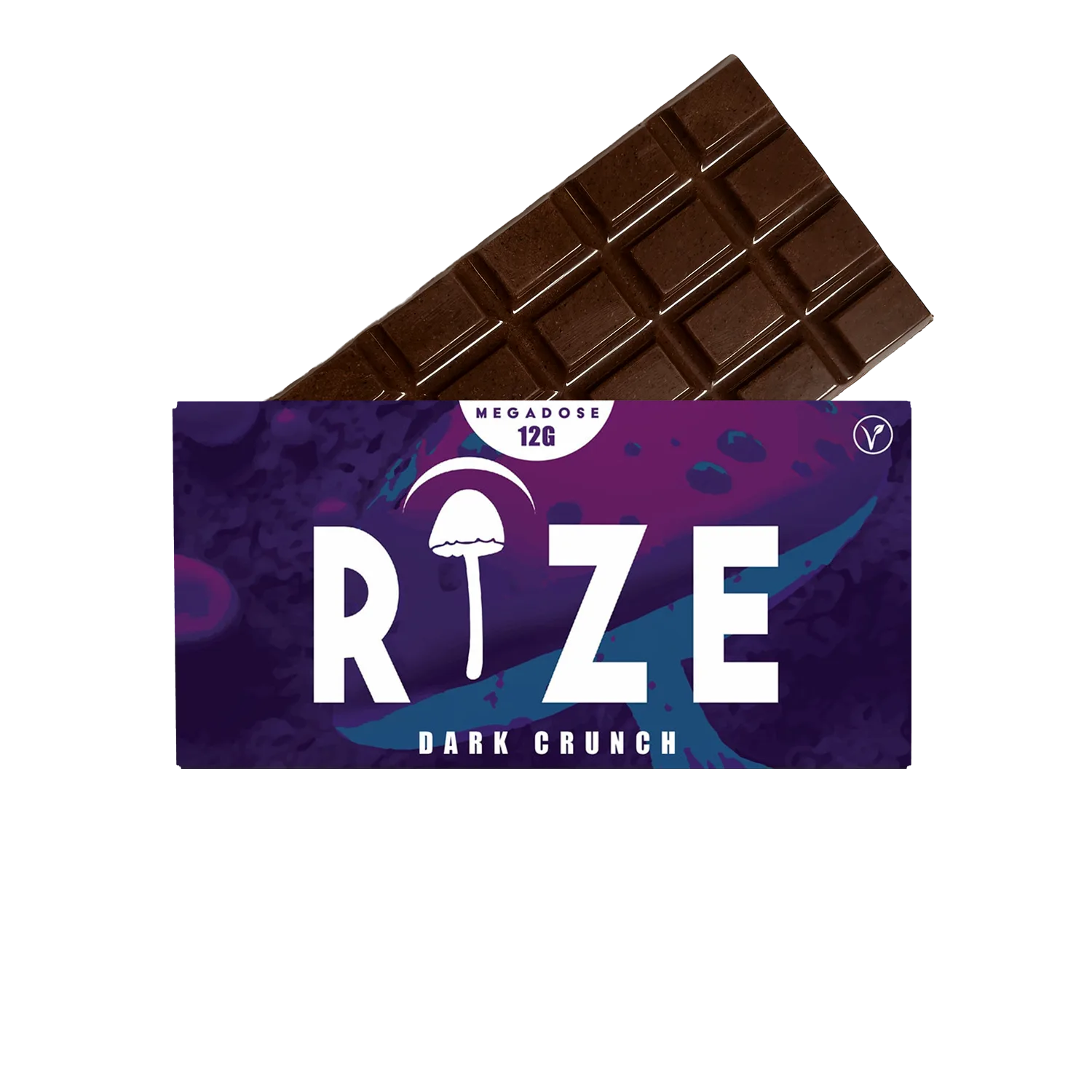
Why they stand out: founded in 2019 by three friends, deVINE built its reputation on curation and lab-tested selection rather than a wall of mystery product. Everything they carry is third-party tested. Their bestselling chocolate line is the Rize 5G mushroom chocolate bar, a 42g bar scored into even squares for measured dosing, in flavors like Milk Crunch, Dark Chocolate, Cookies & Cream, and Caramel Crunch. For experienced users they stock a heavier Rize 12G bar, and they carry other curated chocolate like Majestik and a Tre House microdose bar too. Verified buyer reviews lean toward a controlled, mood-lifting experience rather than an overwhelming one.

Here’s a short walkthrough of what these bars actually look like:

Best for: anyone in Greater Boston who’d rather ask a knowledgeable person a few questions than gamble on an anonymous bar, especially first-timers.

What to know: open 10am to 10pm seven days a week, with free shipping on Greater Boston orders over $65. Because chocolate melts, choose expedited shipping in warm months. Browse the full legal mushrooms collection to compare chocolates, gummies, and tablets. It’s 21+ only, no medical card required.

2. City Smoke Shop (North End)

On Salem Street in Boston’s North End, City Smoke Shop has carved out a reputation as the area’s most dependable spot for alternative wellness and mushroom products, which makes it a real option if you’re searching from the historic district or the waterfront.

Why they stand out: the space is clean, bright, and organized, which matters more than people admit if traditional smoke shops put you off. Staff, one named Jonathan in particular, come up repeatedly in reviews for walking customers through categories in detail and giving straight answers on effects and dosage rather than upselling. They stock a solid range of hemp-derived edibles plus Amanita and functional mushroom options.

Best for: North End residents and visitors who want guidance, not a hard sell.

What to know: as with any smoke-shop purchase, confirm the bar is clearly labeled Amanita or functional and ask to see lab documentation.

3. Rooted In (Back Bay / Newbury Street)

Rooted In is a wellness lifestyle boutique on Newbury Street, not a smoke shop, and it fits the health-conscious Back Bay crowd well.

Why they stand out: the mushroom offering here leans toward premium functional supplements, lion’s mane for focus, reishi for stress and immune support, cordyceps for energy, alongside Amanita-derived options for those after a legal psychedelic-adjacent experience. Staff are consistently described as sharp on product knowledge and genuinely helpful, the kind of place you can enter knowing nothing and leave confident.

Best for: Back Bay shoppers who want a curated, supplement-forward experience and may be more interested in functional benefits than a strong lift.

What to know: the focus skews functional, so if you specifically want a psychoactive Amanita chocolate, confirm availability before making the trip.

4. The Mushroom Shop (Somerville)

Just outside Boston proper on Medford Street in Somerville, The Mushroom Shop is where Greater Boston takes fungi most seriously, though with an important scope note.

Why they stand out: this is a specialty mushroom retailer with deep expertise in functional fungi. The supplement section is stocked with full-spectrum fruiting-body extracts rather than the weaker mycelium-on-grain products common in mass retail. Fruiting-body extracts carry higher concentrations of beta-glucans, the compounds tied to much of functional mushrooms’ studied benefits, an area documented in National Institutes of Health research.

Best for: the curious learner whose interest is broader mushroom-for-health, not a psychoactive bar.

What to know: be clear on scope. The Mushroom Shop focuses on functional fungi and is not the stop for Amanita or psilocybin chocolate. For an Amanita-style chocolate bar, deVINE is the closer fit.

5. Super Smoke Shop (East Boston)

For East Boston shoppers, Super Smoke Shop rounds out the neighborhood coverage as a more price-driven option.

Why they stand out: it’s an accessible, budget-friendly local spot for hemp and mushroom products if you’re on that side of the harbor and don’t want to cross into the city for a single bar.

Best for: East Boston locals prioritizing convenience and price.

What to know: price-driven shops make label-reading even more important. Apply the vetting checklist below before buying, and skip anything with vague “proprietary blend” copy and no lab proof.

6. EarthE CBD (online, ships to Boston)

Not technically a walk-in, but worth including because “near me” sometimes really means “delivered to me.” EarthE CBD is among the more established online retailers shipping Amanita muscaria products directly to Massachusetts addresses.

Why they stand out: a solid option for Boston-area shoppers who prefer ordering from home, with a range that includes mushroom-infused chocolate bars and gummies shipped statewide.

Best for: people who’d rather have it arrive discreetly than make a trip.

What to know: the tradeoff with any online order is you can’t read the lab report in person first, so stick to sellers that post COAs on their site and check that the report matches your batch.

7. deVINE Boston online (free local shipping)

Closing the loop, deVINE earns a second mention for the delivery angle because it solves the one weakness of a pure online order: it’s also a real, accountable storefront you could visit if you wanted to.

Why they stand out: you get the lab-tested, curated selection plus free shipping on Greater Boston orders over $65, with the reassurance that there’s a physical shop and staff behind the website. Browse the same wellness range you’d see in person.

Best for: Boston-area shoppers who want the convenience of delivery without giving up accountability.

What to know: order expedited in summer so the chocolate survives the trip, and remember it’s 21+.

Where to buy shroom chocolate bars near you in Boston, at a glance

Shop Area Format Best for
deVINE Boston South Boston Walk-in + ships local Most trusted, best-stocked
City Smoke Shop North End Walk-in Guidance, clean space
Rooted In Back Bay Walk-in Functional-forward boutique
The Mushroom Shop Somerville Walk-in Functional fungi expertise
EarthE CBD Online (MA) Ships statewide Delivery convenience

One pattern runs through that whole table: the options worth trusting all have something to show you, whether that’s a lab report, a knowledgeable person at the counter, or a verifiable years-long track record. The places to be wary of are the ones that hide behind vague wrapper copy and have nothing to back it up.

What to look for in a shroom chocolate bar

If you remember nothing else from this guide, remember this short checklist. It’s the same one I’d give a friend before they walked into any shop near them.

  • A batch-specific lab report. Not a generic QR sticker, but a certificate of analysis whose lot number matches the bar in your hand. Independent guides rank this as the single most important signal.
  • A named active ingredient. The label should say whether it’s Amanita muscaria, a functional blend, or something else. Vague “proprietary mushroom blend” language with no detail is a red flag.
  • Scored, even squares. Consistent portioning is how you dose responsibly. Start with one square and wait.
  • An accountable seller. A shop you can call or walk into beats a mystery shelf every time. This is the whole local-buying advantage.
  • Honest legal framing. Good shops tell you it’s 21+, psilocybin-free, and subject to state law, and they don’t make medical promises.

Frequently asked questions

Are shroom chocolate bars legal in Boston?

It depends entirely on what’s in them. Bars made with Amanita muscaria or non-psychoactive functional mushrooms are sold legally at Boston-area shops to adults 21 and up. Psilocybin chocolate is not legal to buy at retail, because psilocybin is a controlled substance in Massachusetts and federally. Cambridge, Somerville, and Medford have decriminalized personal psilocybin possession, but that is separate from legal retail sale.

Where can I buy shroom chocolate bars near me in Boston?

deVINE Boston at 619 E Broadway in South Boston is the most reliable walk-in option, open 10am to 10pm daily, with free Greater Boston shipping over $65. Other neighborhood options include City Smoke Shop in the North End and Rooted In in Back Bay. Buying from a staffed shop lets you ask questions and check lab results before you commit.

What do shroom chocolate bars feel like?

For the legal Amanita and blended bars sold locally, verified buyers tend to describe a controlled, mood-lifting, mellow experience rather than a heavy classic trip, especially at low amounts. Effects vary by person and dose. Functional mushroom chocolates, by contrast, aren’t intended to be psychoactive at all.

How do I dose a scored mushroom chocolate bar?

Start with one small square and wait the full onset window, often 30 to 60 minutes, before deciding whether to take more. Treat a higher-potency bar as several sessions, not one sitting. Don’t combine it with alcohol, and keep it well away from children and pets.

Why does the FDA warn about mushroom edibles?

A 2024 outbreak tied to the Diamond Shruumz brand caused 180 illnesses, 73 hospitalizations, and three potentially associated deaths across 34 states, per FDA and CDC reporting. Testing found multiple undisclosed substances in those products, which is exactly why buying from a lab-transparent local shop matters so much.

Is buying online or in person better?

In person lets you read the lab report and ask a real person questions before you buy, which is the safest route. If you prefer delivery, choose a retailer that posts COAs on its site and ships from an accountable business. deVINE offers both, which is part of why it tops this list.


Disclaimer: This article is for informational and research purposes only and is not medical or legal advice. Products discussed are intended for adults 21 and older and are sold as psilocybin-free where noted. Legal status varies by state and locality; verify the rules where you live before purchasing. These statements have not been evaluated by the FDA, and these products are not intended to diagnose, treat, cure, or prevent any disease. Do not use if pregnant or nursing, and consult a licensed medical practitioner before use if you take medication or have a medical condition. Keep out of reach of children and pets.

Psychedelic SEO: 9 Keyword Clusters Psychedelic Operators Should Map Before Investing for 2026

psychedelic seo

Psychedelic SEO Keyword Cluster Map / Strategic Investment Guide 2026

Nine distinct psychedelic SEO keyword clusters with different intent profiles, competitive density, and operator-fit alignment. Operators planning keyword strategy should map their specific situation against each cluster before committing investment:

✦ 01  Ketamine Clinic Transactional    ✦ 06  Harm Reduction Educational
✦ 02  State Psilocybin Services    ✦ 07  Psychedelic Clinical Research
✦ 03  PAT Therapy Educational    ✦ 08  Modality Comparison
✦ 04  Integration Coaching    ✦ 09  Long-Tail Question
✦ 05  Plant Medicine Spiritual

We see the same pattern across psychedelic SEO engagements at the operational consulting stage. Operators arrive with strong product or service offerings, established compliance positioning, and clear commercial objectives, but the keyword strategy underlying their SEO investment is generic enough that the ranking work produces traffic without revenue alignment. The pattern repeats because psychedelic keyword research methodology imported from general healthcare or wellness verticals fails to address the operator-segment specificity that distinguishes effective psychedelic keyword targeting from misaligned investment. A ketamine clinic targeting psilocybin-adjacent keywords captures research traffic that does not convert. A psilocybin service center targeting ketamine-adjacent keywords captures search demand from clients outside the operator’s licensed service framework. An integration coaching practice targeting transactional ketamine treatment keywords captures search intent the practice cannot serve. The misalignment is structural rather than executional.

Our consulting methodology starts with operator-segment identification followed by keyword cluster mapping aligned to the operator’s licensed service offering, geographic operating footprint, and authority signal position. The mapping work distinguishes which clusters the operator should target as primary, which clusters support secondary topical authority development, and which clusters the operator should avoid because targeting them produces compliance exposure or revenue misalignment. The nine clusters below cover the operational psychedelic SEO keyword space we evaluate during the mapping engagement. The ordering reflects commercial-intent strength combined with operator-segment population scale rather than universal best-to-worst ranking. Operators should evaluate each cluster against their specific situation rather than treating the ordering as priority guidance.

Authority infrastructure supporting psychedelic keyword cluster work runs through specialized publisher relationships. The narrowed publisher access pool that affects psychedelic operators broadly affects each keyword cluster differently. Commercial transactional clusters benefit from authority development through clinical and medical-adjacent publishers. Educational clusters benefit from authority development through research-adjacent publishers. We work with the ALT Placements psychedelic authority placement infrastructure for off-site authority development across the publisher categories that align with operator keyword cluster priorities under appropriate compliance review frameworks. The infrastructure matters because mainstream publishers refuse most psychedelic editorial coverage outside clinical research and major industry announcement contexts, which means link authority for psychedelic operators requires specialized infrastructure rather than generalist outreach.

1. Ketamine Clinic Transactional Keywords

Ketamine clinic transactional keywords combine geographic location modifiers with treatment-type queries to capture commercial intent from patients researching ketamine treatment in their service area. The cluster includes keywords like ketamine clinic plus city, IV ketamine treatment plus location, ketamine therapy near me, Spravato provider plus city, esketamine clinic plus location, and adjacent geographic plus treatment-type variations. The first position reflects the cluster’s substantial commercial intent combined with the established commercial market that ketamine clinic operators have built since the early 2010s.

The intent profile is high-purchase-intent. Patients reaching transactional ketamine clinic keywords typically have prior research investment, condition-specific motivation (treatment-resistant depression, anxiety, PTSD), and active provider selection underway. Conversion rates from ranking work in this cluster typically exceed conversion rates across the other eight clusters because the search behavior signals advanced patient research stage rather than early information-discovery stage.

The competitive density is substantial in major metropolitan markets where established ketamine clinic operators have invested in local SEO over multiple years. Less-saturated geographic markets including secondary cities, suburban areas, and rural markets produce substantially lower competitive density with ranking opportunities available with focused local SEO work spanning 60 to 90 days. Operators should evaluate competitive density in their specific geographic market rather than treating the cluster as universally competitive or universally accessible.

The compliance considerations involve FDA off-label use framework where ketamine treatment operates under FDA-approved off-label use rather than FDA-approved on-label use for the most common psychiatric indications. Content optimized for this cluster must calibrate therapeutic claim language to state medical board standards rather than crossing into prohibited claims about specific psychiatric condition outcomes. Spravato (esketamine) keywords face additional compliance considerations because Spravato carries FDA approval for treatment-resistant depression specifically, which affects which therapeutic claims content can make.

The operational fit profile is local SEO emphasis with substantial Google Business Profile optimization investment, geographic content development for each clinic location, citation building across medical directories, and adjacent local SEO technical work. Multi-location ketamine clinic operators face scaled local SEO across multiple stores with each location producing independent local pack visibility.

2. State Psilocybin Services Keywords

State psilocybin services keywords combine geographic state-specific modifiers with psilocybin service-related queries to capture search demand within Oregon Measure 109 and Colorado Proposition 122 regulatory frameworks. The cluster includes keywords like psilocybin service center plus city, psilocybin facilitator plus location, psilocybin therapy plus state, Oregon psilocybin services plus city, Colorado natural medicine plus location, and adjacent state-bounded variations.

The intent profile combines education-research intent and purchase-evaluation intent. Prospective clients researching state psilocybin services typically begin with broader educational queries about the regulatory framework, what-to-expect content, and adjacent informational queries before progressing to specific service center selection queries. The dual-intent profile produces content template implications because content must address both research-stage prospects and selection-stage prospects to maximize cluster ranking value.

The competitive density varies by geographic market within Oregon and Colorado. Portland and Bend markets produce substantial competition from established Oregon psilocybin service centers. Less-saturated Oregon markets including Eugene, Salem, Medford, and adjacent secondary markets produce lower competitive density with ranking opportunities available. Colorado markets remain in early-operator phase as the Natural Medicine Health Act framework implementation continues, with substantially lower competitive density than Oregon markets currently.

The compliance considerations involve substantial state regulatory disclosure obligations. Operators must comply with Oregon Health Authority Psilocybin Services Section requirements for client communication, advertising, and content production. Colorado operators face Colorado Department of Regulatory Agencies framework requirements with separate disclosure obligations. The state-specific frameworks affect content language calibration substantially beyond what unrestricted-vertical content production methodology can address.

The operational fit profile is state-specific content development with substantial regulatory framework awareness, geographic content targeting for each service center location, and adjacent state-bounded SEO methodology. Operators evaluating service partners should verify multi-framework regulatory literacy across Oregon and Colorado frameworks rather than treating state psilocybin services as a generic local SEO application.

3. Psychedelic-Assisted Therapy Educational Keywords

Psychedelic-assisted therapy educational keywords address top-funnel educational queries about psychedelic-assisted therapy concepts, modalities, expected commercial pathways, and therapist credential research. The cluster includes keywords like what is psychedelic-assisted therapy, MDMA-assisted therapy explanation, ketamine-assisted therapy modalities, psychedelic therapist training, and adjacent educational query patterns.

The intent profile is information-discovery rather than purchase-intent. Prospective clients reaching this cluster typically have early-stage research motivation, broad conceptual interest, and limited specific service selection underway. The intent profile means cluster ranking produces topical authority development and audience building rather than direct revenue capture, with cluster value compounding over time as audience members progress toward purchase-evaluation stages.

The competitive density is moderate. Established therapy practices have invested in educational content about psychedelic-assisted therapy modalities. New therapy practices entering the cluster face authority gaps that focused content investment can close over 6 to 9 months of consistent work. MAPS (Multidisciplinary Association for Psychedelic Studies) and adjacent established psychedelic-assisted therapy advocacy organizations provide authoritative content references that newer operators can integrate to support content authority signal development.

The compliance considerations require careful pre-approval framework awareness. MDMA-assisted therapy faced FDA non-approval in August 2024 with sponsor work continuing toward subsequent approval pathways. Content addressing MDMA-assisted therapy must avoid implying current commercial availability outside research contexts where applicable. Ketamine-assisted therapy operates under established off-label frameworks with different content production considerations. Psilocybin therapy content faces state-framework-specific considerations affecting language calibration.

The operational fit profile is educational content development with substantial topical depth, citation-grade content production aligned with clinical research conventions, and authority development through psychedelic-research-adjacent publishers. Therapy practices investing in this cluster should plan multi-quarter content development with compounding payoff aligned to the commercial pathway timeline for psychedelic-assisted therapy approvals.

4. Integration Coaching Informational Keywords

Integration coaching informational keywords address pre-session and post-session psychedelic experience support concepts, practitioner discovery, and integration session expectations. The cluster includes keywords like psychedelic integration coach, integration coaching after psilocybin, what is psychedelic integration, integration therapist near me, post-trip integration support, and adjacent integration-focused variations.

The intent profile combines information-discovery and purchase-evaluation intent. Prospective clients reaching integration coaching keywords typically search after a psychedelic experience or before a planned experience, with intent profiles ranging from educational research through active practitioner selection. The dual-intent profile means content templates must serve both research-stage and selection-stage prospects to capture cluster ranking value across the intent spectrum.

The competitive density is lower than medical-licensed operator segment clusters because integration coaching operates outside state medical licensing frameworks in most jurisdictions, producing operator entry barriers that newer integration coaches can overcome with focused content investment. The geographic-flexible nature of integration coaching (much of which happens remotely via video sessions) means content production produces nationwide acquisition potential rather than purely local ranking value.

The compliance considerations involve careful framework awareness around therapeutic claim language. Integration coaches cannot make therapeutic claims about specific condition treatment because they operate outside state medical licensing, but can address experience integration, meaning-making, harm reduction, and adjacent supportive practices. Content language must distinguish supportive practice work from clinical treatment work to maintain framework compliance.

The four clusters above cover the largest psychedelic operator segments by aggregate search demand. The video below comes from Google Search Central’s Search Off the Record discussion on SEO for photographers, which addresses image landing pages, image optimization, and image-heavy content patterns directly relevant to psychedelic operators whose educational and service content frequently includes substantial image inventory requiring proper SEO handling.

5. Plant Medicine Spiritual Keywords

Plant medicine spiritual keywords address religious-framework search behavior including ayahuasca ceremonies, peyote tradition, plant medicine spirituality, religious-tradition-specific queries, and adjacent religious-protection-aware search patterns. The cluster includes keywords like ayahuasca ceremony near me, plant medicine retreat, ayahuasca church, peyote ceremony, religious psychedelic ceremony, and adjacent variations.

The intent profile combines spiritual-research intent and purchase-evaluation intent for prospective members. The intent profile differs fundamentally from medical-licensed segment clusters because the underlying service offering is religious sacrament rather than medical treatment. Content templates must position service offerings within religious-framework conventions rather than therapeutic-treatment frameworks.

The competitive density is low compared to medical-licensed operator segment clusters because the plant medicine church operator population is substantially smaller. The lower density produces ranking opportunities with focused content development. However, the smaller search volume produces lower aggregate cluster value in absolute terms despite the ranking accessibility.

The compliance considerations require careful religious-framework content positioning. DEA religious exemption framework precedents established through Gonzales v. O Centro Espirita Beneficente Uniao do Vegetal (2006) and Native American Church religious-use frameworks affect content production decisions because content language choices can affect operator standing under federal religious-protection frameworks. Therapeutic claims about specific condition treatment, mental health outcomes, or medical-equivalent benefits can undermine the operator’s religious-framework legal standing rather than supporting commercial SEO objectives.

The operational fit profile is religious-framework content development with substantial spiritual-tradition context, membership information content positioning religious sacrament framing rather than medical treatment framing, and authority development through religious-tradition publishers rather than medical authority sources. Operators investing in this cluster should plan content production with religious-framework expertise rather than generic psychedelic content production methodology.

6. Harm Reduction Educational Keywords

Harm reduction educational keywords address drug information queries including substance-specific harm reduction, drug interaction safety, drug testing, drug combination safety, and adjacent educational nonprofit search environments. The cluster includes keywords like psilocybin harm reduction, MDMA drug interactions, ketamine safety, psychedelic drug testing, mushroom dosage guide, and adjacent variations.

The intent profile is information-discovery dominant with secondary affiliate-driven product discovery for drug testing kits and adjacent harm reduction products. The intent profile means cluster ranking serves educational and harm reduction objectives rather than commercial revenue objectives for most operators, with revenue alignment limited to operators with affiliate relationships or product offerings in adjacent categories.

The competitive density is high. Established harm reduction nonprofits have invested in educational content over decades, with Erowid operating since 1995, DanceSafe since 1998, and MAPS since 1986. The established authority foundation makes newer operator entry difficult on broad informational keywords while leaving room for newer operators on specific harm reduction topics, drug-specific information categories, and adjacent niches not covered by established nonprofit content investment.

The compliance considerations operate under educational and First Amendment frameworks rather than commercial healthcare frameworks. Content addressing drug information operates under journalism and educational framework protections rather than medical treatment frameworks, which produces substantially lower regulatory burden than commercial operator segment content. The lower regulatory burden allows content production velocity and topical breadth exceeding what commercial operator content can sustain.

The operational fit profile is educational content development with citation-grade research backing, peer-reviewed source integration, and authority development through research-adjacent publishers. Harm reduction educational content benefits substantially from AI Overview citation eligibility because educational content with strong topical authority gets cited frequently in AI-generated answer responses.

7. Psychedelic Clinical Research Keywords

Psychedelic clinical research keywords address academic and research-intent queries including clinical trial information, peer-reviewed research, regulatory pathway content, and biotech pipeline information. The cluster includes keywords like psilocybin clinical trial, MDMA Phase 3 results, ketamine antidepressant research, psychedelic FDA approval timeline, and adjacent research-focused variations.

The intent profile is research-discovery and investor-information dominant. The intent profile means cluster ranking serves audiences including researchers, investors, biotech industry professionals, journalists, and adjacent research-aligned audience categories rather than direct consumer-purchase audiences. Cluster value depends on operator commercial alignment with research-aligned audiences rather than direct revenue capture from cluster traffic.

The competitive density is high. Academic publishers, peer-reviewed journals, biotech research operators, and adjacent established research authority sources occupy research-intent SERP positions. ClinicalTrials.gov as the authoritative U.S. clinical trial registry provides authoritative reference for trial enrollment and progress content that newer operators can integrate to support content credibility, though the registry itself dominates ranking on trial-specific queries.

The compliance considerations involve substantial framework constraints around clinical trial communication and pre-approval drug marketing. Psychedelic biotech operators face FDA framework constraints on pipeline content combined with SEC framework constraints on investor communication. Content production typically requires legal review and corporate communications approval before publication, which affects content production velocity substantially relative to other clusters.

The operational fit profile is authority-grade content development with substantial peer-reviewed citation integration, clinical research conventions, and authority development through clinical research and biotech industry publisher infrastructure. Operators investing in this cluster should plan extended content production timelines accounting for legal review cycles affecting publication velocity.

8. Psychedelic Modality Comparison Keywords

Psychedelic modality comparison keywords address middle-funnel comparison intent between ketamine, psilocybin, MDMA, and adjacent psychedelic-assisted therapeutic approaches. The cluster includes keywords like ketamine vs psilocybin, MDMA vs ketamine for trauma, psilocybin vs LSD therapy, ayahuasca vs psilocybin, and adjacent modality comparison variations.

The intent profile combines purchase-evaluation intent and education-research intent. Prospective clients reaching comparison keywords typically have prior research investment, active modality selection underway, and decision-evaluation motivation. The dual-intent profile produces strong commercial value when content templates address comparison evaluation with operator-specific service offering positioning.

The competitive density is moderate. Established psychedelic media operators have invested in comparison content. The competitive density varies by comparison type, with specific modality pair comparisons (ketamine vs psilocybin) facing higher density than broader modality framework comparisons. Newer operator entry into the cluster can succeed with focused comparison content development over 4 to 8 months of consistent work.

The compliance considerations require careful framework awareness across multiple modality regulatory frameworks. Ketamine modality content operates under FDA off-label frameworks. MDMA modality content operates under pre-FDA-approval frameworks with substantial commercial limitations. Psilocybin modality content operates under state psilocybin services frameworks or research frameworks depending on context. Comparison content must address all relevant modality frameworks simultaneously rather than single-framework methodology.

The operational fit profile is comparison content development with substantial modality detail, comparison table implementation enabling SERP enhancement through structured data, and authority development through psychedelic-research-adjacent publishers. The work we run at Client Verge on psychedelic comparison content engagements applies multi-framework compliance literacy spanning ketamine, psilocybin, MDMA, and adjacent modality regulatory considerations.

9. Long-Tail Psychedelic Question Keywords

Long-tail psychedelic question keywords address conversational AI-Overview-aligned question keywords including specific psychedelic experience scenarios, safety considerations, and adjacent question patterns. The cluster includes keywords like can I take psilocybin with SSRIs, how long does ketamine therapy last, what to expect during MDMA therapy, ayahuasca ceremony safety, and adjacent specific question variations.

The intent profile spans information-seeking through purchase-research intent. The volume of distinct long-tail question variations produces a structurally distributed competitive environment where individual questions face less concentrated competition than commercial head terms. New operators can rank on long-tail question keywords with focused content investment over 3 to 6 months because the lower competitive density allows compounding without substantial authority profile prerequisites.

The competitive density is low across most long-tail question variants. The lower density combines with AI search citation alignment to produce exceptional ROI relative to content investment cost. Long-tail question keywords map directly to AI Overview triggering patterns and AI-generated answer summarization, producing dual visibility across traditional search results and AI-generated answers.

The compliance considerations depend on which specific questions content addresses. Drug interaction questions face higher compliance constraints because medication interaction guidance crosses into medical advice territory that should defer to healthcare provider consultation. Experience expectation questions face fewer compliance constraints because the answer addresses informational consumer guidance rather than therapeutic claims. Operators should evaluate each long-tail question’s specific compliance framework before content production rather than treating the cluster as universally compliant.

The operational fit profile is FAQ-structured content development with FAQPage schema implementation, Q&A-format content addressing single questions with substantial depth, and AI search optimization patterns supporting AI citation eligibility. The cluster compounds well as parallel work alongside primary cluster development because content production cost is low while compounding effect across AI search visibility produces outsized impact.

What No Keyword Cluster Strategy Can Solve

The nine psychedelic SEO keyword clusters above cover the operational psychedelic keyword space. They share structural limits no cluster strategy can solve regardless of approach or investment.

The first uncovered limit is paid advertising platform restrictions across psychedelic verticals. Google Ads restricts most psychedelic-adjacent advertising broadly. Meta restricts psychedelic content advertising. TikTok prohibits psychedelic-adjacent advertising. The combined restriction environment concentrates psychedelic marketing pressure onto organic search across all keyword clusters rather than paid channels supplementing organic visibility.

The second limit is the narrowed publisher access pool for off-site authority development. Mainstream publishers refuse most psychedelic editorial coverage outside clinical research contexts. Even with specialized infrastructure like altplacements.com handling scaled placement across legacy psychedelic-adjacent properties, the available publisher universe remains structurally smaller than unrestricted verticals.

The third limit is regulatory framework volatility. FDA decisions, state regulatory framework changes, and adjacent regulatory considerations continue evolving with implications for psychedelic keyword strategy over multi-year engagement horizons. Cluster strategies calibrated to current frameworks cannot anticipate regulatory environment shifts affecting deliverable performance over time.

The fourth limit is timeline reality. Psychedelic SEO produces slower compounding curves than unrestricted verticals because the publisher pool is narrower, the keyword universe is compliance-filtered, and the platform restriction environment concentrates competitive pressure onto organic search. Cluster strategies cannot accelerate compounding beyond what the underlying psychedelic search environment supports.

The fifth limit is YMYL classification implications. Google’s Search Quality Rater Guidelines classify psychedelic content as YMYL because the content category affects health, wellbeing, and financial decisions. The classification produces stronger expertise, authoritativeness, and trustworthiness signal requirements than non-restricted vertical content across all nine clusters.

How to Sequence Cluster Development Across Operator Segments

The nine clusters do not sort into a universal best-to-worst hierarchy. They sort into an operator-segment-specific cluster prioritization map that we use during consulting engagements to align operator situation with cluster investment sequencing. The pattern across operator segments produces predictable cluster prioritization logic.

If the operator is a ketamine clinic, ketamine clinic transactional cluster work sequences first to capture commercial revenue, followed by psychedelic-assisted therapy educational cluster work building supporting topical authority, with long-tail question cluster work running parallel to both. If the operator is a psilocybin service center, state psilocybin services cluster work sequences first to capture in-state demand, followed by modality comparison and educational cluster work supporting prospective client research journeys. If the operator is a psychedelic-assisted therapy practice, educational cluster work sequences first to build authority foundation, with transactional cluster development scaling as commercial pathways open. If the operator is an integration coaching practice, integration coaching informational cluster work and long-tail question cluster work sequence first where competitive density allows faster compounding. If the operator is a plant medicine church, plant medicine spiritual cluster work sequences first with religious-framework expertise rather than commercial cluster prioritization. If the operator is a harm reduction nonprofit, harm reduction educational and long-tail question clusters sequence first where the operator’s authority foundation produces ranking advantages. If the operator is a psychedelic biotech company, clinical research cluster work sequences first with multi-framework legal review supporting content production. If the operator is a psychedelic education content platform, multiple educational and long-tail clusters sequence in parallel supporting content distribution objectives.

The pattern across all nine clusters is that psychedelic SEO keyword strategy requires operator-segment-specific cluster sequencing rather than universal cluster prioritization. We consistently find that operators investing in cluster sequencing aligned to their specific situation produce compounding ranking outcomes calibrated to operational reality. Operators applying generic psychedelic keyword strategy across segment-mismatched cluster prioritization produce work that may rank on terms that do not convert into operational outcomes aligned to the operator’s actual service offering. Authority development supporting cluster sequencing typically runs through specialized infrastructure like ALT Placements across the psychedelic-adjacent publisher categories that align with operator cluster priorities. The strategic call is mapping operator-segment identification to cluster sequence selection rather than treating psychedelic SEO keyword strategy as universal across substantially different operator situations.

Frequently Asked Questions

Which psychedelic keyword clusters produce the strongest ROI for budget-constrained operators?

Budget-constrained psychedelic operators should evaluate keyword cluster ROI against operator-specific situation rather than universal cluster ranking. Ketamine clinic transactional keywords produce the strongest ROI for ketamine clinic operators in less-saturated geographic markets where local SEO compounding produces ranking improvements within 60 to 90 days. State psilocybin services keywords produce strong ROI for psilocybin service center operators in Oregon and Colorado where geographic constraints concentrate search demand within accessible market boundaries. Long-tail psychedelic question keywords produce strong ROI relative to investment for operators across most segments because lower competitive density allows ranking with less authority profile prerequisite work while AI Overview citation eligibility compounds visibility beyond traditional search positioning. Psychedelic-assisted therapy educational keywords and integration coaching informational keywords compound slowly but build topical authority supporting subsequent commercial cluster ranking. Operators should sequence cluster work rather than spreading thin across all clusters simultaneously.

How do FDA and DEA framework constraints affect psychedelic keyword targeting decisions?

FDA and DEA framework constraints affect psychedelic keyword targeting across multiple dimensions. FDA framework constraints on pre-approval drug marketing affect psychedelic biotech operators with clinical-stage compounds where keyword targeting around specific compound names or trial outcomes requires legal review and may face regulatory exposure. FDA Center for Drug Evaluation and Research framework affects ketamine clinic operators with off-label therapeutic claim restrictions where keyword targeting around specific condition treatment claims requires careful content language calibration. DEA Schedule I framework affects research and education content where psychedelic substances classified as Schedule I produce additional content production considerations. DEA religious exemption framework affects plant medicine church operators where keyword content can affect operator standing under federal religious-protection frameworks. State psilocybin frameworks under Oregon Measure 109 and Colorado Proposition 122 produce state-specific regulatory disclosure requirements affecting which keyword clusters operators can target across geographic markets.

What competitive density should psychedelic operators expect across keyword clusters?

Competitive density varies substantially across psychedelic keyword clusters. Ketamine clinic transactional keywords face substantial competitive density in saturated metropolitan markets where established ketamine clinic operators have invested in local SEO over multiple years. State psilocybin services keywords face moderate competitive density in Oregon’s Portland and Bend markets with lower density in Colorado markets still in early-operator phase. Psychedelic-assisted therapy educational keywords face moderate competitive density from established therapy practice educational content investments. Integration coaching keywords face lower competitive density due to operator segment fragmentation. Plant medicine spiritual keywords face low competitive density due to smaller operator population. Harm reduction educational keywords face high competitive density from established nonprofits like DanceSafe, MAPS, and Erowid operating since the 1990s. Clinical research keywords face authority-dense competition from academic publishers and peer-reviewed journals. Comparison and long-tail question keywords face the lowest competitive density across the nine clusters, producing ranking opportunities for operators with focused content investment over 3 to 6 month timelines.

How do AI Overviews affect psychedelic keyword strategy in 2026?

AI Overviews and AI search engines including ChatGPT, Perplexity, Gemini, and Claude have shifted psychedelic search behavior toward conversational query structures and AI-generated answer summarization. Long-tail psychedelic question keywords produce higher value than search volume scoring suggests because conversational queries map to AI Overview triggering patterns and produce dual visibility across traditional search results and AI-generated answers. Educational and informational keyword clusters produce higher AI citation rates than commercial transactional clusters because AI systems typically deprioritize commercial intent content in informational query responses. Harm reduction and clinical research clusters produce particularly high AI citation rates because their authority-backed educational content aligns with AI citation evaluation patterns. Psychedelic operators wanting AI search visibility should optimize content structure for AI citation eligibility through clear question-answer formatting, well-cited authority sources, explicit topical coverage, and adjacent AI-optimization patterns. Technical SEO considerations including JavaScript rendering, age verification handling, and structured data implementation affect AI citation eligibility alongside content quality factors.

How should psychedelic operators sequence keyword cluster development across engagement timelines?

Psychedelic operators should sequence keyword cluster development based on operator segment fit rather than applying universal sequencing logic. Ketamine clinic operators should typically prioritize transactional cluster work first to capture commercial revenue, followed by educational cluster work building supporting topical authority. Psilocybin service center operators should prioritize geographic transactional cluster work first to capture in-state demand, followed by comparison and educational clusters supporting prospective client research journeys. Psychedelic-assisted therapy practices should prioritize educational cluster work first to build authority foundation, with transactional cluster development scaling as commercial pathways open. Integration coaching practices should prioritize informational and long-tail question clusters where competitive density allows faster compounding. Plant medicine churches should focus on spiritual and religious-framework clusters with limited transactional cluster work due to framework considerations. Harm reduction nonprofits should focus on educational and long-tail clusters where their authority foundation produces ranking advantages. Operators across segments benefit from long-tail question cluster development running in parallel with primary cluster work because the cluster compounds rapidly relative to investment cost.

What Psychedelics Mean to Different People: Exploring the Many Perspectives Behind the Experience

pexels regimantas danys 366529467 18235102

Introduction

One of the most fascinating aspects of psychedelics is that they rarely mean the same thing to everyone.

Ask ten people what psychedelics represent, and you may receive ten completely different answers. A neuroscientist may view them as tools for understanding brain function. A therapist may see them as promising subjects of clinical research. An artist may regard them as sources of inspiration and creativity. A spiritual seeker may describe them as catalysts for profound insight. A historian may focus on their role in indigenous traditions and cultural movements.

This diversity of perspectives is part of what makes psychedelics such a compelling subject. They exist at the crossroads of science, culture, religion, philosophy, medicine, art, and personal experience. Unlike many topics that fit neatly into a single category, psychedelics touch nearly every aspect of human life.

Understanding what psychedelics mean to different people helps create a more nuanced and informed conversation. It reminds us that there is no single “correct” interpretation of these experiences and that different viewpoints can coexist while contributing to a broader understanding of the phenomenon.

Psychedelics as Tools for Self-Discovery

For many individuals, psychedelics are primarily associated with introspection and personal growth.

People often describe experiences that encourage them to examine long-held beliefs, emotional patterns, relationships, goals, and personal habits. Thoughts that normally remain beneath conscious awareness may suddenly become more visible and accessible.

Some individuals report gaining new perspectives on challenges they have faced for years. Others describe increased self-understanding, greater emotional honesty, or a renewed sense of purpose.

Whether these insights are temporary or long-lasting varies from person to person, but the potential for self-reflection is one reason psychedelics continue to attract widespread interest.

Psychedelics as Spiritual Experiences

Throughout history, many cultures have used psychedelic substances within spiritual and ceremonial contexts.

For some people, psychedelic experiences are deeply connected to questions about existence, consciousness, and the nature of reality. These experiences may involve feelings of interconnectedness, transcendence, awe, or profound meaning.

Some individuals interpret such experiences through religious frameworks, while others view them as personal encounters with dimensions of consciousness that are difficult to describe using ordinary language.

Even among people who do not identify as religious, psychedelic experiences can evoke feelings traditionally associated with spirituality, including wonder, reverence, gratitude, and a sense of connection to something larger than oneself.

Psychedelics Through the Lens of Science

Scientists often approach psychedelics from a very different perspective.

Researchers are interested in understanding how these substances affect brain function, perception, cognition, emotion, and behavior. From a scientific standpoint, psychedelics offer valuable opportunities to study consciousness itself.

Questions that once seemed purely philosophical can now be explored through neuroscience. How does the brain create a sense of self? Why do people perceive meaning in certain experiences? How do changes in neural activity alter subjective awareness?

For researchers, psychedelics represent powerful tools for investigating some of the most fundamental mysteries of the human mind.

Psychedelics and Mental Health Research

In recent years, psychedelics have become increasingly important subjects of mental health research.

Many scientists and clinicians are studying how psychedelic compounds influence emotional processing, learning, memory, and psychological flexibility.

For professionals in this field, psychedelics are not viewed primarily as recreational substances but as subjects of serious clinical investigation. Their focus centers on understanding therapeutic mechanisms, safety considerations, and potential applications within carefully controlled settings.

This research has significantly contributed to renewed public interest in psychedelics and continues to shape discussions about their future role in healthcare.

Psychedelics as Cultural Phenomena

Psychedelics have left a lasting imprint on modern culture.

Throughout the twentieth century, psychedelic ideas influenced music, visual art, literature, fashion, film, and social movements. Entire creative genres emerged from the exploration of altered states of consciousness.

For cultural historians, psychedelics are not simply chemical substances. They are catalysts that have shaped artistic expression, challenged social norms, and influenced generations of thinkers, creators, and innovators.

The colorful imagery often associated with psychedelic culture reflects deeper themes involving perception, imagination, freedom, and expanded awareness.

What Psychedelics Mean to Artists and Creatives

Many artists view psychedelics as sources of inspiration.

Creative individuals frequently describe experiences that encourage new ways of seeing, thinking, and imagining. Familiar concepts may appear fresh and original. Connections between ideas can become more apparent. Creative blocks may feel temporarily loosened.

While psychedelics are not necessary for creativity, their influence on artistic culture is undeniable. Countless musicians, writers, painters, filmmakers, and designers have explored the relationship between altered consciousness and creative expression.

For these individuals, psychedelics often symbolize curiosity, imagination, and the exploration of possibility.

Indigenous Perspectives on Psychedelics

Long before modern scientific research existed, many indigenous communities had developed sophisticated relationships with psychedelic plants and fungi.

Within these traditions, psychedelics are often regarded not as recreational substances but as sacred tools used within carefully structured cultural and ceremonial contexts.

These practices frequently emphasize community, respect, responsibility, and spiritual significance.

Understanding indigenous perspectives helps broaden contemporary conversations and reminds us that psychedelic knowledge did not originate in modern laboratories. Many traditions have preserved and refined this knowledge over generations.

Skeptical Perspectives

Not everyone views psychedelics positively.

Some people remain skeptical due to concerns about safety, legality, mental health risks, or exaggerated claims. Others question whether psychedelic experiences reveal deeper truths or simply reflect altered brain states.

These perspectives are important because they encourage critical thinking and balanced discussion.

A healthy conversation about psychedelics should include both enthusiasm and skepticism. Meaningful understanding often emerges when different viewpoints are examined thoughtfully rather than dismissed.

Psychedelics as Explorations of Consciousness

For many enthusiasts, the most intriguing aspect of psychedelics is their ability to alter consciousness itself.

Questions about perception, identity, awareness, and reality have fascinated philosophers for thousands of years. Psychedelics offer experiences that directly engage with these questions in ways that can feel intensely personal and immediate.

Some individuals become interested in psychedelics not because they seek specific outcomes but because they are fascinated by consciousness as a phenomenon.

For them, psychedelics represent one of humanity’s most powerful tools for exploring the mysteries of subjective experience.

Why Interpretations Differ So Much

The reason psychedelics mean different things to different people is simple: human beings bring different backgrounds, beliefs, expectations, and experiences to the subject.

A neuroscientist, artist, spiritual practitioner, historian, therapist, and curious beginner may all encounter the same phenomenon while interpreting it through entirely different frameworks.

These interpretations are influenced by culture, education, personal values, life experiences, and individual goals.

As a result, psychedelics become mirrors reflecting the diversity of human perspectives.

Conclusion

Perhaps the most remarkable thing about psychedelics is not the substances themselves but the extraordinary range of meanings people attach to them.

For some, they are scientific tools. For others, they are cultural artifacts, spiritual catalysts, creative inspirations, historical traditions, or opportunities for self-discovery. Each perspective highlights a different aspect of a complex and multifaceted subject.

The ongoing conversation surrounding psychedelics continues to evolve as researchers make new discoveries, cultures share knowledge, communities exchange experiences, and individuals seek deeper understanding.

Ultimately, what psychedelics mean depends largely on who is asking the question. That diversity of interpretation is not a weakness—it is one of the reasons psychedelics remain among the most fascinating subjects in human history.

Beginner’s Guide to Psychedelics: Understanding the Basics, History, Effects, and Responsible Exploration

Introduction

Few topics inspire as much curiosity, fascination, controversy, and misunderstanding as psychedelics. For some people, they represent a doorway into deeper self-awareness and personal growth. For others, they are objects of scientific interest, cultural significance, or spiritual exploration. In recent years, psychedelics have moved from the fringes of public discussion into mainstream conversations about mental health, neuroscience, consciousness, and human potential.

If you’re completely new to psychedelics, the sheer amount of information available can feel overwhelming. There are dozens of substances, countless personal stories, ongoing scientific studies, and a wide range of opinions about their effects and significance. It can be difficult to know where to begin.

This guide is designed to provide a clear and balanced introduction to psychedelics. Rather than focusing on sensational stories or exaggerated claims, we’ll explore what psychedelics are, how they work, where they come from, how they affect the mind, and why they continue to attract interest from researchers, historians, artists, and curious individuals around the world.

What Are Psychedelics?

The term “psychedelic” comes from Greek roots meaning “mind manifesting.” The word was coined in the 1950s to describe substances that can significantly alter perception, cognition, emotion, and consciousness.

Unlike many other psychoactive substances, psychedelics primarily influence the way people experience reality rather than simply stimulating or suppressing the nervous system. They can affect visual perception, sensory awareness, emotional processing, thought patterns, and one’s sense of self.

Classic psychedelics generally include substances such as psilocybin mushrooms, LSD, mescaline, and DMT. Although each has unique characteristics, they share certain similarities in how they interact with the brain and how they influence subjective experience.

Many people describe psychedelic experiences as unusually meaningful, introspective, emotionally intense, or spiritually significant. However, experiences can vary dramatically depending on the individual, environment, mindset, and numerous other factors.

A Brief History of Psychedelics

Psychedelics are not a modern invention. Human beings have used naturally occurring psychedelic plants and fungi for thousands of years.

Archaeological evidence suggests that psychedelic mushrooms and other psychoactive plants have played roles in various indigenous cultures throughout history. Many traditional societies incorporated these substances into ceremonies, healing practices, rites of passage, and spiritual traditions.

In the twentieth century, psychedelics gained attention in Western science. Researchers began studying compounds such as LSD and psilocybin for their potential effects on psychology and mental health. Early research showed promise, but changing political and cultural attitudes eventually led to strict legal restrictions that slowed scientific progress for decades.

Today, interest in psychedelic research has returned. Universities, medical institutions, and research organizations are investigating how psychedelics may contribute to our understanding of consciousness and mental health.

The Most Well-Known Psychedelics

Psilocybin Mushrooms

Often referred to simply as “magic mushrooms,” psilocybin mushrooms contain naturally occurring compounds that can produce profound alterations in perception and consciousness.

Many people report feelings of emotional openness, enhanced appreciation for nature, introspection, and altered sensory experiences. The effects typically last several hours and are often described as deeply personal.

LSD

LSD is one of the most famous psychedelics in modern history. First synthesized in 1938, it became a major subject of scientific research and cultural discussion during the 1950s and 1960s.

LSD is known for producing significant changes in perception, thought patterns, sensory processing, and awareness. Experiences often last considerably longer than those associated with psilocybin.

Mescaline

Mescaline is found naturally in several cactus species and has a long history of ceremonial use among indigenous peoples.

The experience is often described as colorful, emotionally warm, and deeply connected to nature. Mescaline occupies an important place in both historical and contemporary discussions of psychedelic culture.

DMT

DMT is one of the most intriguing psychedelic compounds due to its intense and often short-lived effects.

Many users describe experiences involving vivid imagery, altered realities, and encounters with seemingly autonomous entities or symbolic landscapes. DMT continues to be a major topic of interest among researchers and explorers of consciousness.

How Psychedelics Affect the Brain

One reason psychedelics remain scientifically fascinating is their impact on brain activity.

Researchers have discovered that many classic psychedelics interact with serotonin receptors, particularly the 5-HT2A receptor. These interactions appear to influence communication patterns between different regions of the brain.

Some studies suggest that psychedelics may temporarily reduce activity in networks associated with self-referential thinking while increasing communication across brain regions that do not normally interact as extensively.

This altered connectivity may contribute to experiences such as enhanced creativity, novel perspectives, emotional breakthroughs, and changes in self-perception.

Despite growing scientific understanding, many aspects of psychedelic consciousness remain poorly understood and continue to be active areas of research.

Common Effects of Psychedelics

Changes in Visual Perception

Visual alterations are among the most recognizable psychedelic effects.

Colors may appear more vivid, patterns may become more noticeable, and ordinary objects can seem unusually detailed or meaningful. Some people experience geometric imagery or shifting visual phenomena.

Emotional Intensification

Psychedelics often amplify emotional experiences.

Positive feelings such as joy, wonder, gratitude, and connection may become more pronounced. Difficult emotions may also emerge with unusual intensity, creating opportunities for reflection but also potential challenges.

Altered Sense of Time

Many users report significant changes in time perception.

Minutes may feel like hours, or long periods may seem to pass quickly. This altered relationship with time is a common feature of psychedelic experiences.

Changes in Self-Perception

One of the most discussed aspects of psychedelics is their ability to alter one’s sense of identity.

Some individuals report feeling less attached to their ordinary sense of self and more connected to larger concepts, communities, nature, or existence itself.

The Importance of Set and Setting

Among experienced psychedelic users, few concepts are considered more important than “set and setting.”

“Set” refers to a person’s mindset, including emotions, expectations, mental state, and intentions.

“Setting” refers to the physical and social environment in which an experience occurs.

These factors can strongly influence the nature of a psychedelic experience. Comfortable surroundings, trusted companions, and a positive mindset are often viewed as important elements of responsible exploration.

Potential Risks and Challenges

A balanced understanding of psychedelics requires acknowledging potential risks.

Not every psychedelic experience is pleasant. Difficult experiences can involve fear, confusion, anxiety, emotional discomfort, or overwhelming sensations.

Certain individuals may be at increased risk for adverse psychological reactions. Mental health history, current emotional state, physical health, and environmental factors can all influence outcomes.

Psychedelics are powerful substances that should not be approached casually or recklessly.

Psychedelics and Modern Research

One of the most exciting developments in recent years has been the revival of psychedelic science.

Researchers are studying how psychedelics affect cognition, emotional processing, brain function, and mental health. New findings continue to expand our understanding of these compounds and their potential applications.

Although significant research remains to be done, the growing body of scientific literature has helped bring psychedelics back into serious academic and medical discussion.

Why People Explore Psychedelics

People are drawn to psychedelics for many different reasons.

Some seek personal growth. Others are interested in creativity, spirituality, self-discovery, scientific curiosity, or a deeper understanding of consciousness.

There is no single reason people become interested in psychedelics. Individual motivations often reflect broader questions about meaning, identity, perception, and the human experience itself.

Conclusion

Psychedelics occupy a unique place at the intersection of science, culture, history, psychology, and spirituality. They challenge conventional assumptions about consciousness and continue to inspire questions that humanity has explored for centuries.

For beginners, the most valuable approach is one of curiosity, education, and respect. Understanding what psychedelics are, how they affect the mind, their historical significance, and the importance of responsible exploration provides a strong foundation for further learning.

Whether your interest is scientific, cultural, philosophical, or personal, psychedelics offer a fascinating lens through which to examine the complexities of human consciousness and the remarkable capacity of the mind.